Rough automatic draft, low quality: expect mistakes and awkward wording. It will be replaced by a better translation. Original →
27
ELLIPSE
I. N. Bronstein
Introduction
Given: a point O and a circle C lying in a plane not passing through O.
Let a straight line, infinite in both directions (as we expect in geometry), move in such a way that it always passes through O and through one of the circle points C.
With this movement, a straight line describes a surface consisting of two bells (strips).
This is the final surface. *).
If it is intersected by different planes, then the cycle does not pass through point O, then during the production of curved lines, called final sections.
Their uses:
ellipse, hyperbola and parabola.
They were known back in Ancient Greece. They were discovered by a certain Menaechmus around 360 BC, and they came to us through the remarkable work of the outstanding mathematician Apollonius, written 200 years later.
The first of these curves is discussed here.
*) Only one cavity of the final surface is shown on the left.
Everyone knows this figure. It is encountered in elementary astronomy and geography (trajectories of movement of planets and satellites, the shape of the earth’s meridian, the path of an electron around an atom), in drawing, drawing and stereometry (figure technical details, round objects and geometric bodies), but what an ellipse is, why it is interesting - and this is truly a wonderful figure, possessing beautiful and important properties - nothing is said about this in school textbooks.
To the question “what is an ellipse?” one will answer: “an elongated circle” or “an elongated circle” *), others - “a compressed circle (circle)”, others - “a curved oval shape”, others will not answer anything, but will simply make a more or less successful figure; There is some truth in each of these answers, but they require further clarification.
Is it enough, for example, to say that an ellipse is an oval curve?
*) A circle is a line, and a circle is part of a plane inside it. For an ellipse, there are no similar words: both the curve itself and the part of the plane inside it are called the same, they say: “length of the ellipse”, “area of the ellipse”. In each case, the reader can easily determine what meaning of the word “ellipse” is being discussed.
28
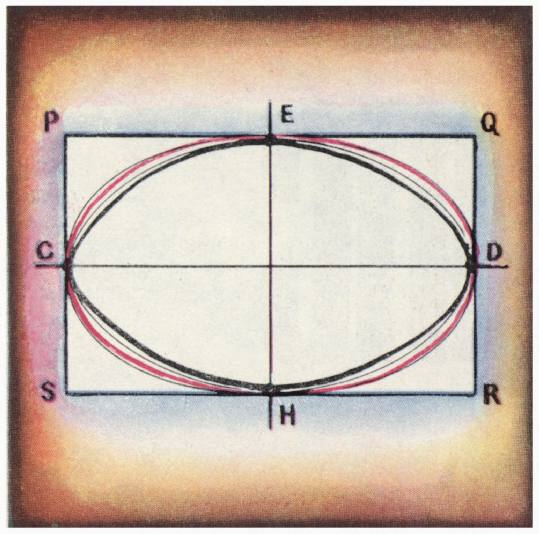
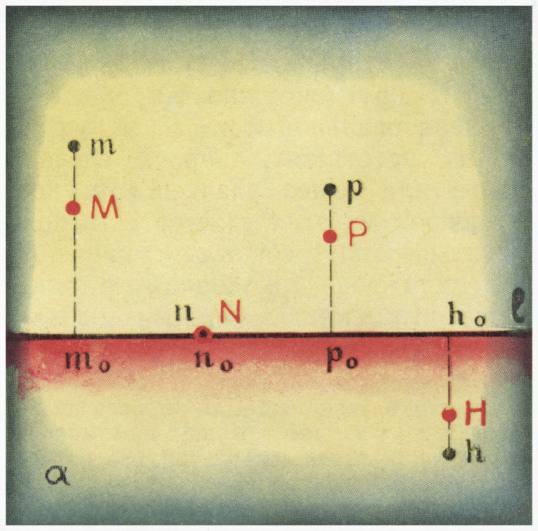
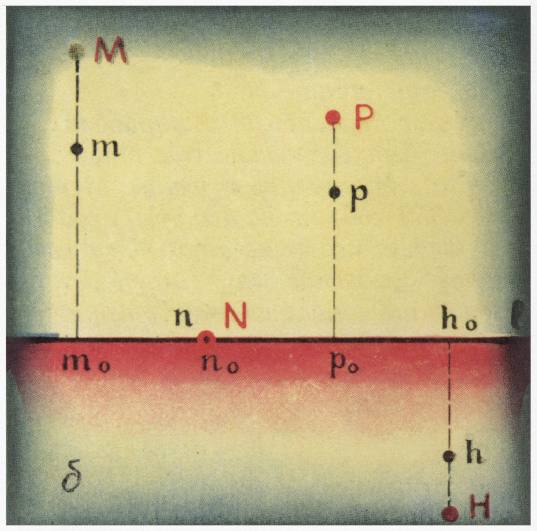
Fig. 1. Only the red oval is an ellipse.
new form? These words usually mean a line with two axes of symmetry CD and EH, written out in a rectangle PQRS and placed on a circle (Fig. 1). The same meaning is included in the words “compressed” or “extended circle”. But you can write many curves of this kind into a rectangle - some of them are shown in figure 1. Only one of them - red - has the right to be called an ellipse. How does it stand out from other curves?
They can also be obtained by compressing
by stretching (or stretching) the circle, but this will not be uniform. To understand this, let’s refer to the geometric transformation of the plane - uniform axial deformation or, briefly, deformation.
Deformation *)
Let us take a certain straight line l in a given plane Π and a given positive number k. We will call the deformation of the plane P relative to the l axis with a coefficient k such a transformation of the plane into itself, in which each of its points m goes to point M according to the rules:
-
both points m and M lie on the same perpendicular to the l axis on one side of it; points lying on the axis itself remain motionless;
-
the distance of the point from the axis is multiplied by k, that is, , where is the base of the perpendicular from point m to the l axis (Fig. 2, a, b).
If , then all points of the plane (except for the point on the axis itself) move away from the axis - the tension plane, and if , then they approach the axis -
*) This word (from the Latin “deformation”—change in shape) is used here together with the expression “stretching or rolling.”
Fig. 2. Deformation with coefficients a) b) .
29
running_head:
folio:
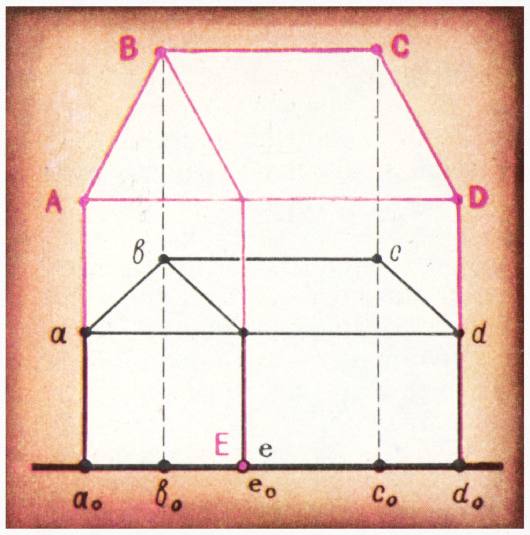
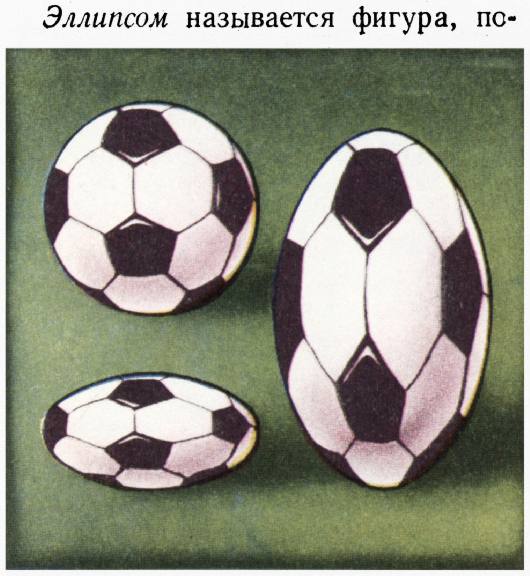
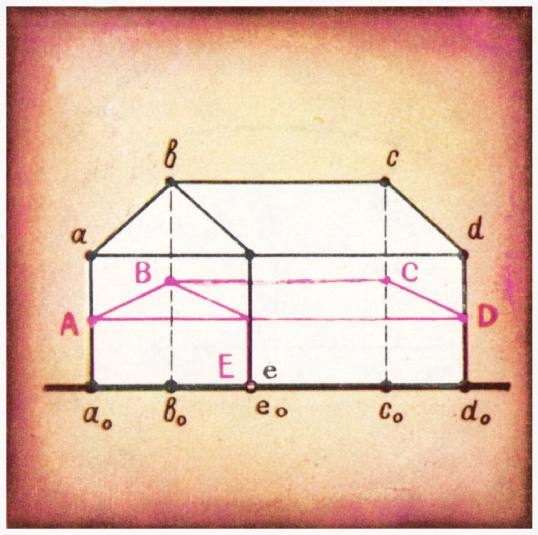
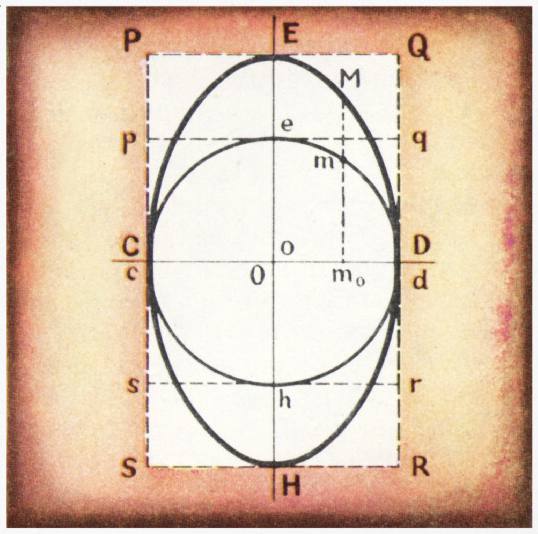
Fig. 3. Deformations with and . Notice the change in roof pitch.
the plane collapses. When all points of the plane remain in place; the latter case is called the mode-destiny transformation.
Let some figure (that is, some set of points) be given on the plane Π. We will be interested in the set of all points obtained from as a result of deformation (see Fig. 3, 4).
What is Elipis? Elipis elements
An elipis is a figure called
Fig. 4. Deformation of the image of a soccer ball with coefficients (bottom left) and (right).
obtained by the deformation of the circle relative to its diameter (Fig. 5).
Let be the radius of the circle; then its diameter , lying on the axis, will transform into itself , and the diameter perpendicular to it will transform into the segment . Let us denote the length of the segment by . Then .
The segments and are called the axes of the ellipse; the numbers and will be called the semi-axes of the elipis. If (stretch), then (Fig. 5).
Fig. 5. Elipis - circumferential deformation
30
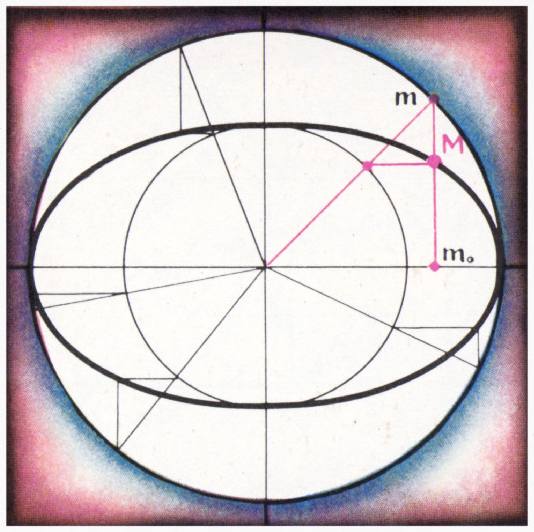
Fig. 6. This way you can build an ellipse.
If (compression), then (Fig. 6). With (identity transformation) the circle turns into a circle. In order not to violate the generality of the definition of an ellipse, we agree to consider a circle to be a special case of an ellipse (). The larger of the segments , is called the major axis of the ellipse, the smaller - the minor axis. So, if , then is the semiminor axis and is the major one, and if , then vice versa.
In both cases .
Point —the center of the circle—will transform into itself () during deformation. O is called the center of the ellipse, the points , , and are its vertices.
The square , circumscribed around the circle (the “mother” of the ellipse), one side of which is parallel and the other perpendicular to the deformation axis, is transformed into a rectangle from the sides and , circumscribed around the ellipse; it is called characteristic of our ellipse, since it completely determines it. The sides of the Characteristic rectangle touch the ellipse at its vertices.
How to make an ellipse thicker?
If the axes of the ellipse are given, then the easiest way is to measure the ellipse by hand by first constructing a characteristic rectangle and then inscribing an oval curve into it. But this method, with little practice, can confidently draw an almost real ellipse). We already know that there are many oval curves with the same axes. You can accurately construct how many corner points of the ellipse. The most common and simple way of such construction is shown in figure 6.
On this figure two concentric circles have radii and . Figure out this construction yourself and prove its legitimacy, that is, prove that on figure .
By making this construction for several points , , , … of a circle of radius , we can get how many corner points of our ellipse. All that remains is to connect them with a smooth line by hand or using a pattern.
But it is interesting to measure an ellipse with a continuous movement, that is, without lifting the pencil from the paper, just as we draw a circle with a compass. This can be done with a special device - an ellipsoid. We will talk about it below when we get acquainted with the equation of the ellipse. But first we need to find out what an equation of lines is.
Equation of lines *)
One of the replacement methods discovered in the 17th century is the coordinate method, which allows one to translate geometric concepts into algebraic language. This method makes it possible to establish a correspondence between lines lying in the plane on which the coordinate system is installed and equations containing two letters and .
An equation of a certain line is such an equation for and , which turns to the same place when the values are substituted into it in that and only in that
*) You can read more about the equation of lines in any textbook on analytical geometry.
31
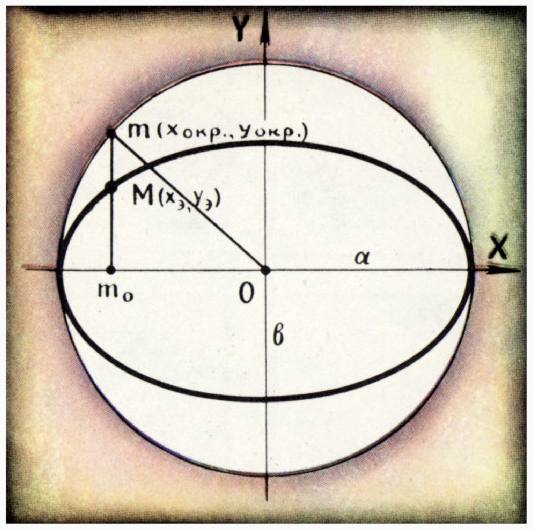
Fig. 7. is a point on a circle, is a point on an ellipse.
case when the point with coordinates lies on this line.
We can also say that a line defined by an equation is the locus of points whose coordinates satisfy this equation.
For example, the equation is the equation of the bisector of the I and III coordinate angles, and the equation of a circle of radius with the center at the origin will be written as follows: .
It can be easily obtained from the Pythagorean theorem.
Ellipse equation
An ellipse with semi-axes and is obtained from a circle of radius by deformation with a coefficient (Fig. 7). Let us establish coordinate axes on the plane where both of these lines are located; Let’s direct the axis along the deformation axis, and the axis through the center of the circle (also the center of the ellipse) perpendicular to the axis. Let be any point on the circle, and be the point of the ellipse at which passes.
the coordinates of the point are denoted by , and the coordinates of the point by . Obviously, by definition of deformation
(*)
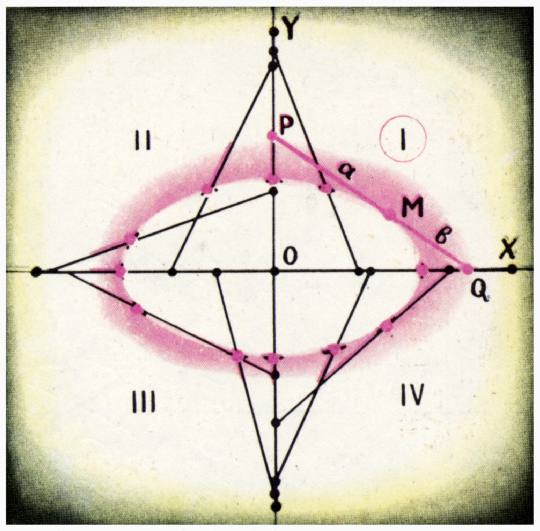
Fig. 8. Point describes an ellipse.
where
If we substitute the coordinates of any of its points into the equation of the circle , then the equality will be true
which means, replacing and according to formula (*), we see that the equality will also be true
for any point .
If the point does not lie on the ellipse, then the point , which fell into as a result of deformation, did not lie on the circle, and the equation is incorrect; This means that equation is also false.
From the definition of the equation of a line we obtain the following equation of the ellipse
Noticing that , we can reduce this equation to the form
This is the equation of the ellipse in the most convenient (so-called canonical) form.
32
Let us consider the following geometric problem (Fig. 8).
The segment moves in a plane so that one of its ends slides along the straight line , and the other slides along the straight line perpendicular to it. What line does the point of this segment cover?
Let us prove that this curve is an ellipse. Let’s apply the coordinate method (Fig. 9) - for the coordinate axes used along which the segment slides. Let the coordinates of the point be and (they depend on the angle ). From the similarity of triangles and we have , or .
Equation (1) cannot yet be called the equation of the desired trajectory: it is compiled in relation to figure 9, where the segment lies in the quarter and both coordinates of the point are positive. Only under this condition can we assume that , and ; if the segment is in the II, III or IV quarter at figure 8, then you need to count , , choosing the necessary signs each time.
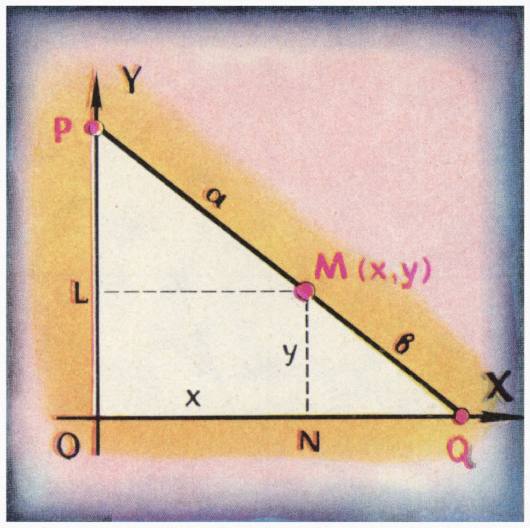
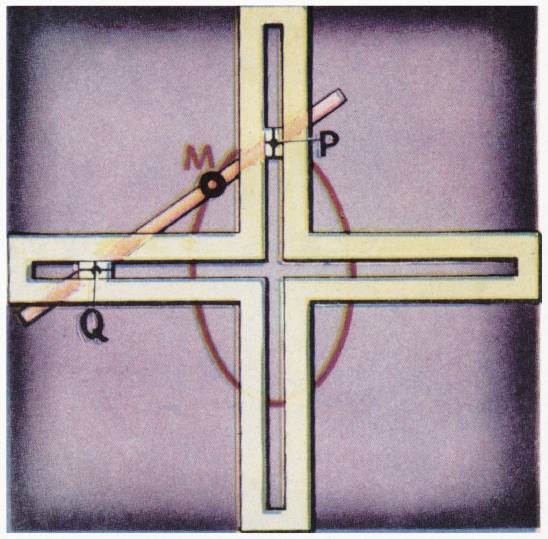
Fig. 10. Ellipsograph.
However, equation (1) is also suitable for the second quarter, since is squared and changing the sign of will not change this equation. For III and IV quarters, equation (1) should be replaced with this:
The pair of equations (1) and (2) can be replaced by a single equation
which is easily reduced to the form
The required curve is an ellipse.
The design of the ellipsograph is based on the result obtained. A cross is placed on the paper or drawing board, in which there are two mutually perpendicular slots (Fig. 10). Three couplings are connected to the straight bar, which can be secured at any point on the bar. The outer muffs and can go in the slots of the cross, and the middle one is equipped with a pencil, which, when moving the bar, draws an ellipse. Having secured the muffs along the given half-axes , , we can draw an ellipse with these half-axes.
33
Inclined sections of a circular cylinder - ellipses
By intersecting a round cylinder with a plane that is neither perpendicular nor parallel to its axis, we obtain more or less elongated ovals, depending on the angle of inclination of the section. This means that every housewife cuts the sausage into slices for guests and often (to “save”) making the corner sharp enough so that the oval has a larger area.
Let us prove that these sections are not just ovals, but real ellipses. To do this, it is enough to establish that the oval is obtained from a circle (the base of the cylinder) by stretching; coefficient is equal to , where is the angle between the planes of the section and the base of the cylinder.
Let us draw (Fig. 11) at the base of the cylinder two mutually perpendicular diameters: - parallel and - perpendicular to the line of intersection of both planes, and draw through them the planes and , parallel to the axis of the cylinder, as well as the plane , parallel to passing through the point of the section. Knowing that the length of the projection of a segment onto a certain line is equal to the length of the segment itself,
multiplied by the cosine of the angle between it and its projection, we get
If we now put both figures and on the same plane so that is aligned with , then they will take the same position as on figure 5, with , where .
This proves our statement.
It is interesting that for each ellipse you can specify a position such that it turns out to be a cross section of a round cylinder, the radius of which is equal to the small area of the ellipse. To do this, you first need to take a perpendicular section of the cylinder and rotate the plane of this section around one of the diameters of the resulting circle by an angle whose cosine is equal to .
This is always possible since here.
Mating ellipse diameters
An interesting property of the ellipse immediately follows from the last result: the midpoints of all parallel chords of the ellipse form a straight segment passing through the center of the ellipse (Fig. 12). This property is very indo
34
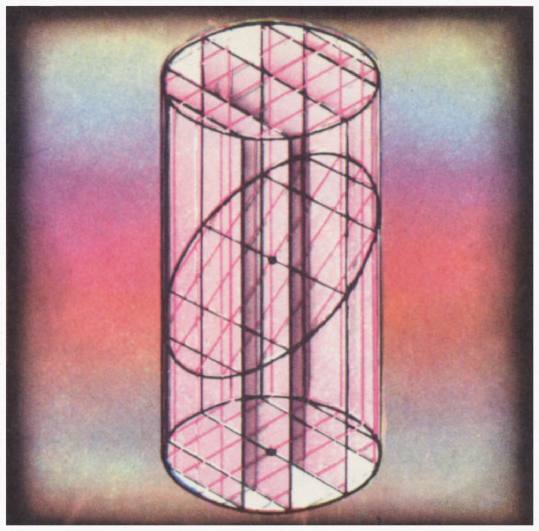
Fig. 13. Proof of the property of conjugate diameters.
for a circle: the midpoints of its parallel chords lie on a diameter perpendicular to these chords. Now place the ellipse in the position of the section of a circular cylinder and draw through the parallel chords of the ellipse a series of planes parallel to the axis of the cylinder (Fig. 13). In the plane of the perpendicular section of the cylinder, parallel chords of the circle are obtained, the cross-sections of which lie on its diameter. The midpoints of the chords of the ellipse lie at the intersection of the plane of the ellipse and the plane passing through the resulting diameter and through the axis of the cylinder. This is a straight segment, obviously passing through the center of the ellipse and dividing it in half.
The chord of an ellipse passing through its center is called the diameter of the ellipse. An ellipse has, generally speaking, unequal diameters. The largest of them is the major axis, and the smallest is the minor. If a second series of chords is drawn in the ellipse, parallel to the resulting diameter, then their midpoints lie on the diameter belonging to the first series of chords (Fig. 12). The two resulting diameters are called mutually conjugate. For each diameter of an ellipse there is a conjugate to it. Note that the circle of each pair has a conjugate
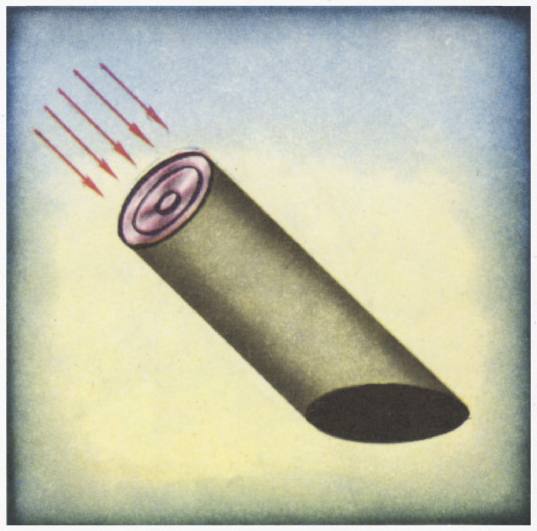
Fig. 14. The projection of a circle is also an ellipse.
The diameters are mutually perpendicular, but the ellipse does not, with the exception of the axes of the ellipse.
Projection of a circle - ellipse
If you project a circle lying in a certain plane onto another plane, neither parallel nor perpendicular to the first, then the projection will result in an oval curve. It is formed, for example, on the grass in the form of a shadow from a disk flying in the air (Fig. 14).
This oval is again an ellipse. The reader can easily verify this proof for himself. Here you don’t even need to make a special drawing - just turn to figure 11, but look at it from a different point of view: we will consider the line CEDH to be a circle (CD=EH=a), and the projecting cylinder - not round, but oval. Here cd=CD=a, eh=EH·cosα=b. We need to prove that cedh is an ellipse; the surface in this case is called an elliptical cylinder - based on the shape of its perpendicular section.
The path of proof is the same as in the proof of the theorem on the section of a circular cylinder. This time m₀m=M₀M·cosα, where α is the angle between the planes. Therefore, the oval cedh is derived from CEDH with a slope
35
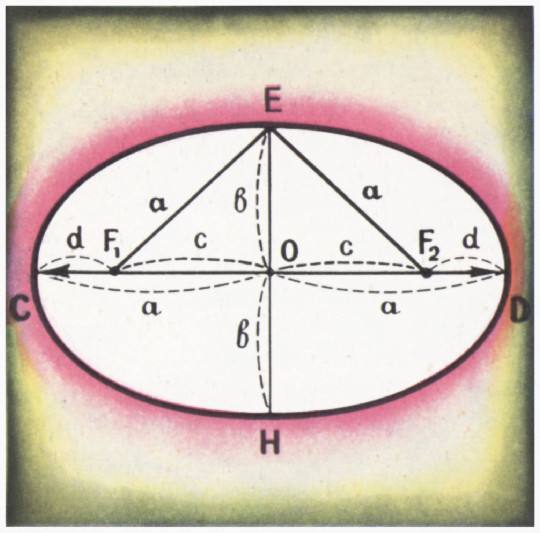
Fig. 15. and are the foci of the ellipse.
coefficient .
The perpendicular diameters of the circle are now projected into mutually conjugate diameters of the ellipse. This fact is of great importance in the theory of depicting spatial figures on a plane.
Focal property of an ellipse
We move on to the most important property of the ellipse - focal. This is an adjective from the word “focus”*) - this is the name given to two remarkable points lying inside the ellipse on its major axis symmetrically relative to the center of the ellipse. The distance of each focus from the ends of the minor axis of the ellipse is equal to half the length of the major axis (Fig. 15).
We will consider an ellipse as a section of a round cylinder - we have seen that we always have to do this. Let us now roll a ball inscribed into the cylinder into the cylinder from both ends until both balls hit the plane of this section
*) The Latin word “phosis” means very. The origin of this term is as follows: if you place a light source at one focus of an ellipse, then all the rays reflected from the ellipse according to the law “the angle of incidence is equal to the angle of reflection” will pass through the second focus. This will be discussed in more detail in one of the issues «Kvant».
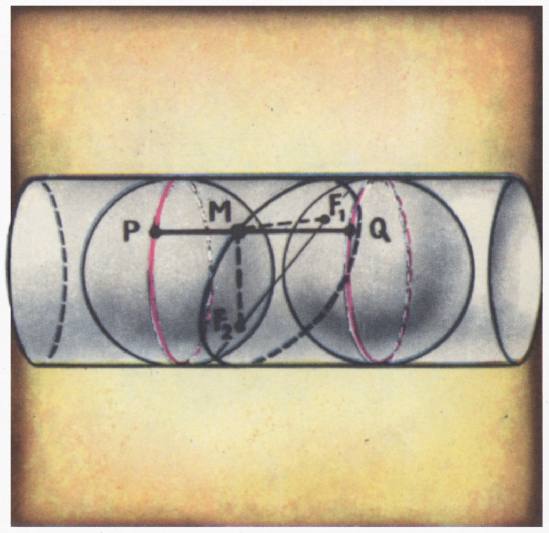
Fig. 16. Proof of the focal property of the ellipse.
(Fig. 16) (in geometric language: let’s inscribe the balls into the cylinder so that they touch the section plane).
The touching point and will be the focal points of our ellipse.
Each ball touches a cylinder along its circumference. Both of these circles are depicted on figure 16 in red.
Now take any point of the ellipse and mark the generator of the cylinder on which point lies ( and are the points of this generator lying on the red circles). It is clear that are the lengths of two tangents to the right ball drawn from to the touching point and . They are equal, like the form of a round cone with vertex , described near the left ball.
Using the same reasoning for the left ball, we obtain a similar equality . Adding both equalities, we get
But is the same for all the generators of our cylinder: this is the distance between the red circles (between the centers of our balls). This means that whatever point on the ellipse we take, there will be
36
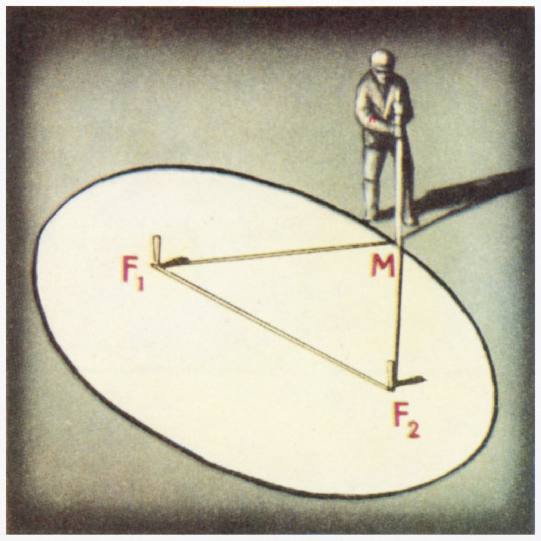
Fig. 17. This is how an ellipse is obtained in practice.
equality .
Thus, the sum of the distances from any point of the ellipse to its two foci is a constant value.
This is the focal property of the ellipse. An ellipse is often defined as a “geometric location” (in modern language - as a set) of points lying in the same plane for which the sum of the distances to two points (foci) is a constant value.
If we choose the end of its major axis as the point of the ellipse (for example, the point on figure 15), then by the focal property . Due to symmetry ; this means that this constant is equal to , that is, the major axis . If we take the end of the minor axis, for example, the point , as the point , then , and since due to symmetry , then each of these segments is equal to . This proves the statement made at the beginning of this section, and provides a way to construct the foci of an ellipse along its axes (Fig. 15).
Ellipsograph for gardeners
The well-known construction of an ellipse by continuous movement using a thread ring is based on the focal property of an ellipse. Let’s put a sheet of paper on a lined board and stick two canile pins on it. Having thrown a thread ring onto both cops (the perimeter of the ring should be greater than twice the distance between the cops), pull the thread with a sharp pencil so that you get a triangle (). If you move the pencil along the paper so that the thread remains taut, the triangle will be deformed, but its perimeter remains constant. The length of the side also remains constant, which means and the pencil will describe the ellipse.
We have a new, very simple ellipsograph. This method has been successfully used with elliptical flower terminals. Instead of kopki, two stakes are driven into the ground, a ring is made of a thick rope, and an ellipse is drawn on the ground not with a pencil, but with a stick (Fig. 17).
We did not explain the origin of the name “ellipse” (in Greek “ellipsis” means “disadvantage” - what does the disadvantage have to do with it?), We did not talk about many other very important properties of this curve - properties common to all finite sections: ellipse, hyperbola and parabola. These issues will be covered in future issues «Kvant».
Spatial figure in this stat only give a general idea of their day. When performing figure, preference was given to clarity, rather than building a correct spatial figure on a plane *).
The laws of representation of spatial figures on a plane will be discussed in one of the upcoming issues of the magazine.
*) Try to prove that the hyperbole given on page 26 is, strictly speaking, incorrectly depicted.